
Read Along with Us: The Barker Book Club
The Barker Book Club meets four to five times annually to discuss adoption-related titles. Staff from across the organization—from Finance to Post-Adoption—come together to read books that deepen our understanding of adoption, identity, and family. We intentionally select titles that are meaningful to our work and potentially meaningful to those we serve, with an emphasis on lifting the voices of adopted persons, alongside works by birth and adoptive parents.
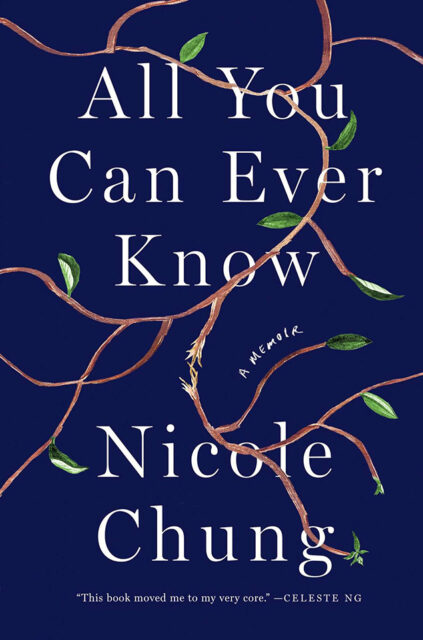
December 2025 Pick: All You Can Ever Know by Nicole Chung (2018)
Rating: Recommended[1]: Offers meaningful, respectful insights into adoption themes.
Recommended for: Adopted Persons, Adoptive Parents, Birth Parents, anyone hoping to learn more about an adopted person’s experience
Content Note: All You Can Ever Know includes sensitive themes such as premature birth, pregnancy and miscarriage, racism, mental health struggles, and accounts of physical and emotional abuse. The memoir also explores search and reunion, relationships with adoptive and birth families, and the identity exploration journey many adoptees take over the course of their lives.
Review
Nicole Chung’s memoir gave us a deeply empathetic window into the lived experience of a transracial adoptee. Her clear, expressive writing captures perspective in a way that helps those without personal experience in adoption understand the emotional terrain—both tender and painful—of navigating identity, belonging, and family across cultures. Below are the major themes that stood out to us in our reading and discussion.
Identity, Isolation, and the Lifelong Nature of Adoption
Chung vividly portrays the isolation she felt as a Korean adoptee raised in a white family and community, illuminating how these early experiences shaped her identity formation. Early in the book she writes, “Caught between my family’s ‘colorblind’ ideal and the obvious notice of others, perhaps it isn’t surprising which made me feel safer—which I preferred, and tried to adopt as my own.”
Her reflections later in life, especially conversations with her young daughter, highlight how the work of identity formation does not end with the adoptee alone—it extends across generations. The memoir reinforces that adoption is not a static event. Meaning-making, self-understanding, and the reexamination of one’s story continue throughout one’s life.
The Weight of Missing Information
Chung explores the complexities that arise when adoptive parents fill in unknown histories with well-intentioned assumptions. Confronting the truth during search and reunion reveals how destabilizing those assumptions can become. Her story underscores the importance of adoptive parents being comfortable compassionately saying, “I don’t know,” rather than attempting to close gaps with comforting narratives that may not reflect reality.
Her journey of reclaiming lost pieces—siblings, culture, language—illustrates both the beauty and the burden of reunion. A striking moment comes when she writes, “If a stranger could become my sister…” capturing the emotional magnitude of reclaiming relationships that may at times seem irretrievable.
Challenging Colorblindness
Chung offers a nuanced examination of colorblindness, describing how being raised in an environment that minimized race shaped her sense of safety, belonging, and self-worth. As an adult, she recognizes how essential it is to challenge that perspective. She describes feeling responsible as her family’s “de-facto Asian ambassador,” reminding them that their experiences of the world are shaped by whiteness, while hers are not.
Her reflections powerfully demonstrate her evolution from accepting colorblindness to reclaiming and defending her racial identity, even when it means challenging those she loves.
Reunion and Family Identities
Chung’s reunion story features her birth father, a role less commonly highlighted in adoption narratives. The memoir demonstrates how any member of the birth family—not only birth mothers—can meaningfully influence reunion, for better or for worse.
Chung also writes about inviting her adoptive parents into the search and reunion process, portraying how this inclusion opened space for communication and acceptance that might not otherwise have been possible.
Her exploration of motherhood—the mother who raised her, the birth mother she imagined, her birth mother in reality, and her own journey as a parent—creates a layered reflection on nature, nurture, fantasy, and truth.
Access to Medical and Social Information
The memoir highlights the barriers faced by adoptees in states where access to original birth information is restricted or costly. Chung illustrates how these systems place adoptees at a medical, emotional, and generational disadvantage. Her story reinforces the conviction that ownership of personal information, and the ability to consent or decline to release it, should rest with those to whom the information belongs: birth parents and adoptees.
Moving Beyond “Good” or “Bad”
Throughout the book, Chung wrestles with the question of whether adoption was ultimately “good” or “bad.” Her answer both resists and moves beyond simplification. She demonstrates through story and reflections that adoption contains love and loss, joy and grief, gain and separation. None of these elements can be separated from the others, and the memoir honors the complexity of holding all of them at once.
Read Along with Us!
In February 2026, the Barker Book Club will gather to discuss Love Does Not Conquer All, by Peter Mutabazi with Mark Tabb. Peter Mutabazi draws on his own experience as a formerly street‑connected child and later a foster and adoptive parent to examine the limits of love alone in raising children. We look forward to sharing our reflections with you next year!
Until then—happy reading!
- The Barker Book Club
[1] The Barker rating system does not label books as “good” or “bad.” Instead, it evaluates how honestly a work engages with core adoption themes and portrays the experiences of the adoption triad, as well as its relevance to the adoption community.