
Read Along with Us: The Barker Book Club
The Barker Book Club meets four to five times annually to discuss adoption-related titles. Staff from across the organization—from Finance to Post-Adoption—come together to read books that deepen our understanding of adoption, identity, and family. We intentionally select titles that are meaningful to our work and potentially meaningful to those we serve, with an emphasis on lifting the voices of adopted persons, alongside works by birth and adoptive parents.
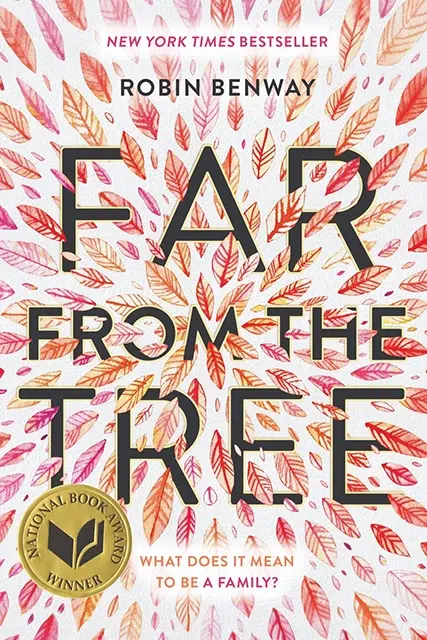
April 2026 Pick: Far from the Tree by Robin Benway (2017)
Rating: Recommended : Offers meaningful, accessible insights into adoption and identity, especially for youth and families reading together.
Recommended for: Families with adolescents, particularly those interested in reading together or engaging in a family book club. Also well-suited for teenagers (approximately ages 13+) and adoption professionals seeking a youth-centered perspective.
Content Note: Far from the Tree explores themes of foster care, adoption, teen pregnancy, identity, and sibling relationships. It includes depictions of family conflict, emotional distress, and references to childhood adversity within the foster care system.
Review
Robin Benway’s Far from the Tree prompted a thoughtful and wide-ranging conversation. Told through the alternating perspectives of three siblings separated by adoption—Grace, Maya, and Joaquin—the novel offers a layered, emotionally resonant exploration of identity, connection, and belonging.
Participants consistently praised the book’s strong prose, vivid imagery, and particularly effective structure. By centering each sibling’s voice, Benway creates distinct and compelling perspectives that allow readers to understand how shared history can be experienced in profoundly different ways.
Sibling Connections and Idealized Outcomes
At the heart of the novel is the relationship between the three siblings, each navigating their own history while forming new connections with one another. Many readers found these relationships moving and satisfying, particularly in the way each character seemed to fulfill an emotional need for the others.
At the same time, we noted this dynamic could feel somewhat idealized. While the siblings’ bond is deeply appealing, it unfolds with a level of ease and completeness that may not fully reflect the complexity of real-life reunions. This balance—between emotional truth and narrative neatness—was a recurring theme throughout the discussion, though this approach is very common and somewhat expected in the YA genre.
Nuanced Family Portrayals
One of the strengths of the novel lies in its portrayal of a wide range of family experiences. The book presents many caregivers who are well-intentioned and, at times, deeply supportive. This felt refreshing to readers, especially given that adoption narratives often focus more heavily on dysfunction.
At the same time, the portrayals are somewhat narrow, leaning toward more positive or “best case” scenarios. Even so, participants appreciated that the book did not entirely overlook more difficult realities. Joaquin’s experiences in foster care, for example, acknowledge the presence of harmful environments alongside the depiction of exceptionally supportive foster parents in Mark and Linda. Their approach of modeling care and consistency without forcing connection stood out as a particularly thoughtful representation of trauma-informed parenting, if a little unrealistically flawless.
Importantly, the novel highlights a key truth echoed in our discussion: even in loving families, parents cannot fully know or understand everything their children are thinking or experiencing.
Adoption, Birth Parenting, and Missed Opportunities
Grace’s storyline, which includes her experience as a teen birth parent, resonated strongly with readers. Her parents’ delayed response to her emotional needs, as well as their limited awareness of her struggles (including bullying), felt grounded and realistic.
The depiction of the birth father as largely absent due to decisions made by his own parents, added another layer of complexity. Participants noted the underlying tragedy in this storyline, emphasizing how systems and family dynamics can limit opportunities for connection long before individuals have agency in those decisions.
Voice, Perspective, and Accessibility
Benway is not personally connected to adoption, yet readers widely agreed that the novel reflects careful research and a respectful approach to the subject matter. The audiobook, in particular, was noted for its strong narration, which enhanced the distinctiveness of each character’s voice.
The book’s structure and readability make it especially accessible for younger audiences. It has strong potential as a shared reading experience for families, offering opportunities for meaningful conversation between parents and teenagers.
Balancing Hope and Realism
As a young adult novel, Far from the Tree resolves many of its storylines in ways that feel tidy and complete. Certain moments—such as the siblings’ meeting with extended family—were described as somewhat “wrapped in a bow,” prioritizing emotional closure over realism.
However, this was largely understood within the context of the YA genre. The sense of hope and resolution, while not always reflective of real-life complexity, provides an entry point for younger readers to engage with challenging topics in a supportive and affirming way.
Final Reflections
Our April discussion highlighted Far from the Tree as a compelling, youth-centered exploration of adoption, identity, and family. While some aspects lean toward idealism, the novel opens valuable space for reflection, particularly for young people navigating questions of belonging and connection.
For families reading together, the book offers not only an engaging story but also a foundation for meaningful conversation about experiences that are often difficult to name.
Read Along with Us!
Stay tuned for the blog on our June 2026 pick, When We Become Ours: A YA Adoptee Anthology.
Until then—happy reading!
– The Barker Book Club