
Read Along with Us: The Barker Book Club
The Barker Book Club meets four to five times annually to discuss adoption-related titles. Staff from across the organization, from Finance to Post-Adoption, come together to read books that deepen our understanding of adoption, identity, and family. We intentionally select titles that are meaningful to our work and potentially meaningful to those we serve, with an emphasis on lifting the voices of adopted persons, alongside works by birth and adoptive parents.
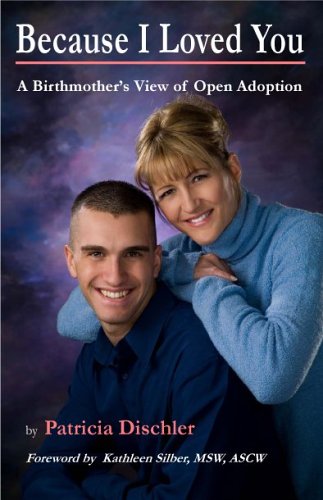
September 2026 Pick: Because I Loved You by Patricia Dischler (2006)
Rating: Recommended: Offers a thoughtful and emotionally honest look at one birth mother’s experience with open adoption, while acknowledging that adoption journeys vary widely and may not reflect every person’s experience.
Recommended for: Birth and first parents, prospective adoptive parents, adoption professionals, and anyone interested in the history and evolution of open adoption practices. Readers should be prepared to engage thoughtfully with a memoir that reflects one individual’s experience rather than a universal adoption narrative.
Content Note: Discussions of unplanned pregnancy, adoption placement, shame, religious pressure, family conflict, grief, loss, and difficult decision-making. Some readers may find portions of the book triggering due to references to societal stigma surrounding pregnancy and placement, particularly for birth and first parents.
Review
Our September 2026 Book Club selection, Because I Loved You by Patricia Dischler, offered a unique perspective among this year’s readings. Part memoir and part practical reflection, the book chronicles Dischler’s experience placing her son for adoption and navigating one of the earliest forms of what would become known as open adoption.
The memoir offers a deeply personal account that traces not only the author’s initial decision-making process but also the evolution of adoption-centered relationships over decades. Readers consistently praised Dischler’s honesty, vulnerability, and willingness to share both her strengths and her mistakes. Finally, the book may be difficult to locate, as it appears to be out of print. However, Barker owns a limited number of copies that will be available for sale at the 2027 Adoption and Foster Care Conference. It is also available instantly in eBook format.
The Power of Choice and Options Counseling
One of the strongest themes to emerge from our discussion was the importance of unbiased options counseling for expectant parents. Participants appreciated how the book illustrates the profound impact of professionals who provided information, guidance, and support without attempting to direct the author’s decision.
Rather than portraying Dischler as someone needing to be rescued, the book presents her as a capable young woman navigating an incredibly difficult situation. Readers noted that this approach remains relevant today. The memoir serves as a reminder that expectant parents deserve accurate information, respect, and the autonomy to make informed decisions about their futures.
A Spirit of Openness
One of the most compelling aspects of Because I Loved You is its portrayal of open adoption (contact between birth and adoptive families) at a time when such relationships were far less common or widely discussed. Long before openness became a standard part of adoption conversations, Dischler and her son’s adoptive parents worked to build a relationship grounded in communication, trust, and mutual respect.
Readers were struck not only by the level of contact described in the memoir, but by the underlying spirit of openness that shaped those interactions. Throughout the book, birth and adoptive family members demonstrate a commitment to acknowledging one another’s importance, prioritizing the well-being of the child. Participants noted that this broader understanding of openness is critical, especially in situations where ongoing contact is limited, or may not be possible.
The Emotional Reality of Ongoing Contact
Readers appreciated that Dischler does not shy away from describing the emotional complexity of maintaining an ongoing relationship with her son’s adoptive parents. Moments of anticipation, uncertainty, and vulnerability appear throughout the memoir, particularly surrounding communication and contact with her son and his family.
These sections sparked meaningful discussion about the emotional courage required to participate in open adoption. Participants noted that Dischler extends considerable grace toward expectant parents considering adoption, frequently emphasizing the importance of preserving their sense of agency and self-determination throughout the process.
The book also highlights a benefit often discussed in conversations about openness: the possibility that adopted persons may grow up knowing they were loved by their birth family, rather than being left to speculate about why adoption occurred.
Shame, Stigma, and Social Context
One of the more challenging aspects of the book involves its portrayal of shame. Several readers noted that portions of the memoir may be difficult for birth and first parents, particularly those who have experienced religious judgment or social stigma related to pregnancy and adoption.
Dischler candidly recounts moments in which authority figures communicated messages of shame, and readers appreciated her willingness to push back against those narratives. At the same time, participants observed that traces of that shame appear to remain present in the author’s own understanding of the experience. Rather than viewing this as a flaw in the memoir, many saw it as an honest reflection of the lasting impact that societal messages can have on individuals facing crisis pregnancies.
The book also illuminates how adoption affected not only Dischler, but her entire family. Several readers were particularly moved by the author’s descriptions of her father and the ways her pregnancy and subsequent placement shaped her family as a whole.
Holding Space for Complexity
Our group recognized that Because I Loved You represents a particularly positive adoption experience. Readers appreciated the thoughtfulness and mutual respect demonstrated throughout the relationships described in the book, while acknowledging that many adoption experiences are more complicated and may include greater conflict, loss, or ambiguity.
Several participants found themselves curious about perspectives that remain largely unexplored in the memoir, particularly the experiences of the birth father. Those lingering questions served as a reminder that every adoption story contains multiple viewpoints, and no single narrative can fully capture the complexity of adoption as a whole.
Final Reflections
Because I Loved You offers a rare window into one birth mother’s experience of adoption, openness, and lifelong connection. Honest, reflective, and often instructional, the memoir invites readers to consider how respect, transparency, and support can shape adoption relationships over time.
While not every reader will see their own experience reflected in Dischler’s story, the book provides an important opportunity to engage with a birth parent’s perspective and to reflect on the ways adoption practices have evolved. Perhaps most importantly, it reminds us that adoption decisions are made by real people navigating difficult circumstances, deserving of both compassion and respect.