
Read Along with Us: The Barker Book Club
The Barker Book Club meets four to five times annually to discuss adoption-related titles. Staff from across the organization, from Finance to Post-Adoption, come together to read books that deepen our understanding of adoption, identity, and family. We intentionally select titles that are meaningful to our work and potentially meaningful to those we serve, with an emphasis on lifting the voices of adopted persons, alongside works by birth and adoptive parents.
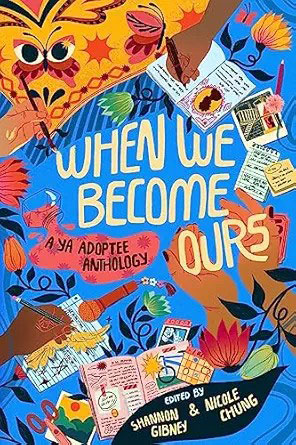
June 2026 Pick: When We Become Ours: A YA Adoption Anthology (2023)
By Emily Marshall, Elena Taylor, Victoria Alves, Linda Baxter, and Nancy Wilkinson
Rating: Recommended: Offers meaningful, accessible insights into adoption and identity, especially for youth and families reading together.
Recommended for: Adopted persons, families with adolescents, prospective adoptive parents, friends and family of adopted persons, professionals working with adopted persons.
Content Note: Discussions of adoption-related loss and grief, identity struggles, experiences of racism and discrimination, family separation, substance use, domestic violence, mental health challenges, trauma, and feelings of displacement or exclusion. Some pieces may also reference neglect, emotional distress, or systemic inequities connected to adoption and foster care.
Review
Our June Book Club selection, When We Become Ours: A YA Adoption Anthology, was an easy favorite. Rather than focusing on a single storyline, this collection brings together a diverse group of adoptee authors whose voices, experiences, genres, and perspectives reflect the vast complexity of adoption itself. Participants consistently praised both the quality of the writing and the breadth of experiences represented throughout the anthology. By the end of our discussion, many identified it as their favorite book club selection of the year.
Given the anthology format, we approached this discussion a little differently. Rather than reviewing the collection as a whole, each participant selected a standout story that resonated with them personally. What emerged was a powerful reminder that there is no single adoption narrative. Different readers connected with different stories, yet common themes of identity, belonging, grief, resilience, and self-discovery appeared throughout.
Empathy, Loss, and the Stories We Tell Ourselves
“The Star of Ruin” by Meredith Ireland emerged as one of our favorite stories in the anthology. More than one reader remarked that they wished it were a full-length novel. If Ireland ever decides to continue these characters’ journey, she has an enthusiastic audience waiting!
Set in a richly imagined dystopian universe, the story is creative, original, and immediately engaging. From its opening lines, Ireland draws readers into a world where a common girl may become Queen, but only through profound sacrifice:
“In the country of Husei, the hills are lush and green. The rivers are wide and the climate is mild… In the country of Husei, there is the Letting. On the night the Star of Heaven becomes Heavenly Queen, the rivers run red with the blood of the Star’s Family.”
Beneath its fantasy setting, the story explores many themes familiar to adopted persons, including loss, identity formation, biological and adoptive sibling relationships, and the natural tendency to construct personal narratives when information about one’s origins is limited or unavailable. The story also subtly reflects the historical and socioeconomic realities that contributed to the prevalence of international adoption in the 1990s and early 2000s.
What resonated most strongly with readers, however, was the story’s appeal for empathy and grace toward birth and first families. Feelings of abandonment are common, understandable, and deeply real for many adopted persons. Yet Ireland invites readers to consider that decisions resulting in separation may sometimes have been made under impossible circumstances, by people doing the best they could with the choices available to them. Rather than minimizing the pain of loss, the story acknowledges that difficult decisions can have painful consequences while still being rooted in love.
Grief, and Forgiveness
“Haunt Me, Then” by MeMe Collier is a moving exploration of both tangible and intangible grief. The story follows an adopted person who communicates with spirits as a profession while grappling with the loss of a sibling, unanswered questions, and the lasting impact of absence.
Readers appreciated the nuanced portrayal of how missing information can shape identity, particularly for individuals adopted internationally. Through gorgeous and darkly humorous prose, the story captures the way grief can persist even when the person being grieved was never fully known. As one character observes, “It’s amazing… how a person’s absence can affect you even more than their presence.” Rather than presenting loss as something to overcome, Collier acknowledges its complexity and the different ways it can manifest throughout a person’s life.
Belonging and Cultural Identity
“Shawl Dance“ by Susan Harness follows Katy, a transracial Native adoptee attending her first powwow. Through her experience, the story explores cultural connection, historical trauma, and the challenge of finding belonging after being separated from one’s community and heritage.
Readers were especially struck by the story’s willingness to examine the complicated reality that reconnecting with one’s culture is not always simple. Questions of authenticity, identity, and community acceptance emerge throughout Katy’s journey, highlighting challenges faced by many adoptees seeking connection to their cultural roots. When one character states, “It doesn’t matter who raises you, you have a Native American heritage. You are part of a culture that is all of us,” it directly addresses the protagonist’s fear that she has no real claim to her own identity. The story reminds readers that belonging is often an ongoing process rather than a destination, particularly for adoptees who have experienced separation from their cultural roots or limited access to their heritage.
Everyday Stories Matter Too
“Catch“ by Nicole Chung, whose memoir All You Can Ever Know was previously featured in the Barker Book Club, offers a quieter but equally powerful exploration of identity and belonging. Set in a small Oregon beach town, the story follows Anna, a Korean adoptee spending time with family while navigating questions about herself and her place in the world.
Readers appreciated that the story does not center crisis or dramatic revelation. Instead, it demonstrates how adoption-related identity development often unfolds through ordinary conversations, relationships, memories, and experiences. Anna reflects that she knows “the familiar white spaces and white faces as well as I knew everything in this town,” a line that succinctly captures both familiarity and isolation. The result is a deeply relatable narrative that highlights the significance of everyday moments in shaping identity.
Resilience in the Face of Grief
“How Slow the Snow is Falling“ by Mark Oshiro is an LGBTQ+ affirming story that centers on grief, perseverance, and healing. The story follows a young person learning to navigate loss while continuing to move forward, even when doing so feels difficult.
Readers appreciated the story’s balance of honesty and hope. Rather than minimizing pain, Oshiro acknowledges the realities of grief while illustrating the possibility of connection, growth, and resilience. Moments of humor and unexpected kindness provide warmth throughout the narrative, creating a story that feels both grounded and affirming. The story ultimately suggests that healing is rarely linear, but that relationships and community can help sustain us through periods of profound loss. “I whoop in excitement and dance about on the cement path in this tiny park, fully aware of all possible outcomes, this is perhaps the cheesiest. It’s snowing. It’s snowing, just like we wanted it to, just like I needed it to.”
The Search for Understanding
“The Dream Dealer’s Audition“ by Sun Yung Shin explores many questions familiar to adopted persons: What parts of ourselves might remain unknowable? How do we make meaning from missing pieces? Set in an imaginative world where dreams are both deeply personal and professionally valued, the story uses fantasy to examine identity, origins, and the universal desire to understand oneself more fully.
The story resonated with us because it captures a reality familiar to many adopted persons: some questions about our histories may never be answered completely. Yet even in uncertainty, people continue searching for meaning, connection, and self-understanding. As the story reflects, “There was something deeply wild about dreams that made their own cosmos each night and unmade it by the morning, leaving only traces of light, glimpses of understanding.” As the final story in the anthology, this image feels particularly apt for the adoption experience, where answers are sometimes partial, fragmented, or discovered gradually over time.
Final Reflections
More than any other selection this year, When We Become Ours demonstrated the power of many voices sharing one broad experience. The anthology refuses simple narratives about adoption, instead presenting stories that are hopeful, painful, humorous, imaginative, and deeply human. For adopted persons, families, and professionals alike, it offers an opportunity to explore adoption through a wide range of perspectives while centering adoptee voices. We highly recommend!